


Behind the Care: Spotlighting the Human Side of Concussion Recovery with Becca Squires
September 15, 2026
|
By Julie Gales
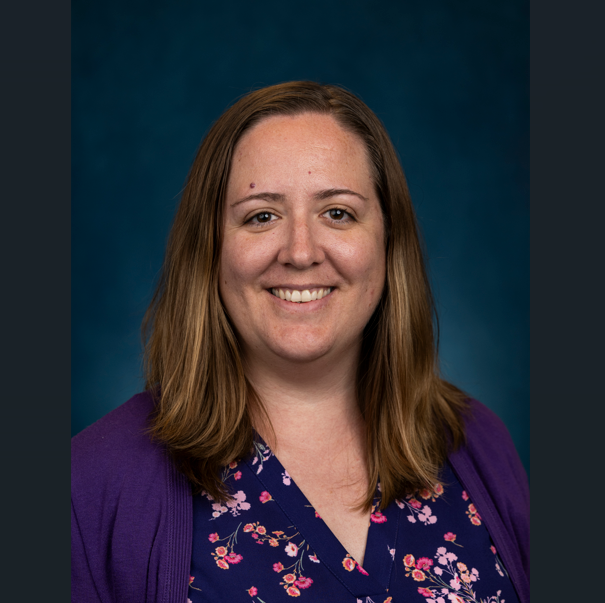
Recovery from a traumatic brain injury requires more than just scans, rest, and physical therapy. It takes a whole-person approach to help patients navigate the emotional and physical hurdles of daily life. We sat down with Becca Squires, a LMSW and the Program Coordinator for Michigan Medicine’s Concussion Recovery Program to talk about her path to social work, the power of interdisciplinary care, and what it really takes to support patients through brain injury recovery.
Q: Can you share a bit about your role and your history here at Michigan Medicine?
I’m a licensed clinical social worker and the Program Coordinator for our Concussion Recovery Program, which sits within Rehab Psychology. I started at Michigan Medicine in the summer of 2013 and transitioned into Physical Medicine & Rehabilitation (PM&R) in 2019. Early on, I worked with concussion patients peripherally within the general PM&R pool, but in January 2022, I moved into this dedicated role as we built out our formal, interdisciplinary concussion program.
Q: What originally drew you to social work as a career?
I earned my bachelor’s in social work from Western Michigan University. During my undergrad years, we had to take a series of introductory courses, and something in social work just clicked for me. Social work beautifully marries mental health, behavioral health, and counseling with patient-in-environment care. It recognizes that a person doesn’t just exist in a doctor’s office or a therapy chair, they live in the real world. My goal is figuring out how to meet a patient’s needs both inside the healthcare system and across the rest of their everyday life.
Q: How does your perspective as a social worker mesh with the rest of your care team?
I’m immersed in a team of psychologists, physicians, and physician assistants who are incredible clinicians. At the same time, social work brings a unique nuance by factoring in a patient’s broader environment differently. Having that variety in perspective is so important because every provider brings a distinct strength to the patient care space.
Q: What inspired you to specialize in concussion and traumatic brain injury care?
What drew me to PM&R is the focus on balancing a patient’s current symptoms with improving their actual day-to-day functioning. Regardless of the impact of a patient’s symptoms on their daily life, there are always ways to help them feel more engaged in values-based activities, and take meaningful steps toward recovery which will improve their quality of life.
Concussion care is a unique pocket within that space because individual impact of concussion can vary widely from patient to patient. It gives us the opportunity to bring psychological and behavioral interventions right to the forefront. Recovery isn’t just about X-rays, MRIs, and physical therapy. It’s about processing the emotional trauma and psychological impact of what happened.
Q: Who has been your biggest professional influence?
My very first supervisor at Michigan Medicine, Katie Barry, was hugely influential. She taught me how to find the specific patient populations you’re truly passionate about serving, and she showed me the ropes when it came to resource coverage and intervention strategies. We worked together for a long time, and her guidance deeply shaped the clinician I am today.
Q: Is there a specific patient demographic with whom you particularly enjoy working?
I enjoy working with all our patients, but it’s exceptionally refreshing to work with young adults, college students, and people in their late 20s. This generation is so resilient and possesses a deep, preexisting understanding of mental health and wellness. They come in knowing that proactive strategies can help them feel better, and that self-awareness becomes a massive asset in their recovery.
Q: Do you work primarily with elite athletes or the general public?
For many athlete patients, we aren’t the first touchpoint because they often go through the NeuroSport pathway. For the general population, however, I’m typically one of the first people they meet in the PM&R clinic after a concussion referral.
Q: What happens during that initial intake assessment with you?
It’s all about evaluating where the patient is at that moment. First, I check on their symptoms. Are they experiencing significant fatigue, brain fog, or dizziness. I ask what specialists they’re already working with, whether that’s a physiatrist, physical therapist, or neurologist. We also screen for depression and social determinants of health. My goal is to figure out if our program is the right fit, discuss the psychological impacts of the injury, and map out interventions to ensure they get the right care. Speed is key here. Getting patients evaluated and into interventions quickly makes a huge difference in their overall outcome and recovery timeline.
Q: After the initial assessment, what are some of the next steps for concussion patients?
We have a few different care pathways to right-size their treatment. Some patients are scheduled directly with our PM&R physician or physician assistant, while others might work solely with me for psychotherapy and behavioral health groups, or receive a neuropsychological evaluation and feedback. Our electronic chart system triggers automated flags, so that when an Emergency Department provider types in “concussion” that patient is routed into our clinic seamlessly.
Q: What is one common myth about concussion or TBI recovery that you find yourself constantly trying to debunk?
A: The idea that recovery means 100% elimination of every single symptom, and that if a symptom hasn’t completely gone away, you aren’t feeling better. Recovery requires consistent effort, and sometimes simply reducing your stress response around a symptom improves quality of life just as much as if the symptom were gone entirely.
Q: Beyond getting cleared to go back to work, sports, or everyday activities, what does a meaningful win look like to you?
A meaningful win is when a patient feels truly heard and understood in our group therapy sessions. When someone says, “I didn’t even have to explain myself. Everyone just got what I meant,” it validates their experience and lets them know they aren’t alone. That sense of connection builds buy-in for behavioral tools and encourages patients to share and try new strategies they might not have considered before.
Q: When a patient finishes rehabilitation and leaves your care, what do you hope they remember most?
I hope they feel that they were at the center of their own care and that their treatment was genuinely individualized to meet their specific needs. Dealing with a concussion means managing the total stress of the situation, not just physical symptoms like headaches and dizziness, but also real-world hurdles like logistics and paperwork. I want patients to remember that we recognized and supported their entire experience.
Q: Have you noticed a shift in concussion demographics throughout your career?
Not in demographics, but definitely in the types of accidents. E-bikes and electric scooters are a huge concern. Technology has outpaced safety regulations, and riders often don’t realize that 35 mph is car-level speed. Your body simply isn’t built to absorb an impact at those speeds without protection, which is why wearing a helmet on every ride is non-negotiable. We are seeing far too many preventable injuries from these devices.