Center Member Research Highlights
December 4, 2025
|
By admin
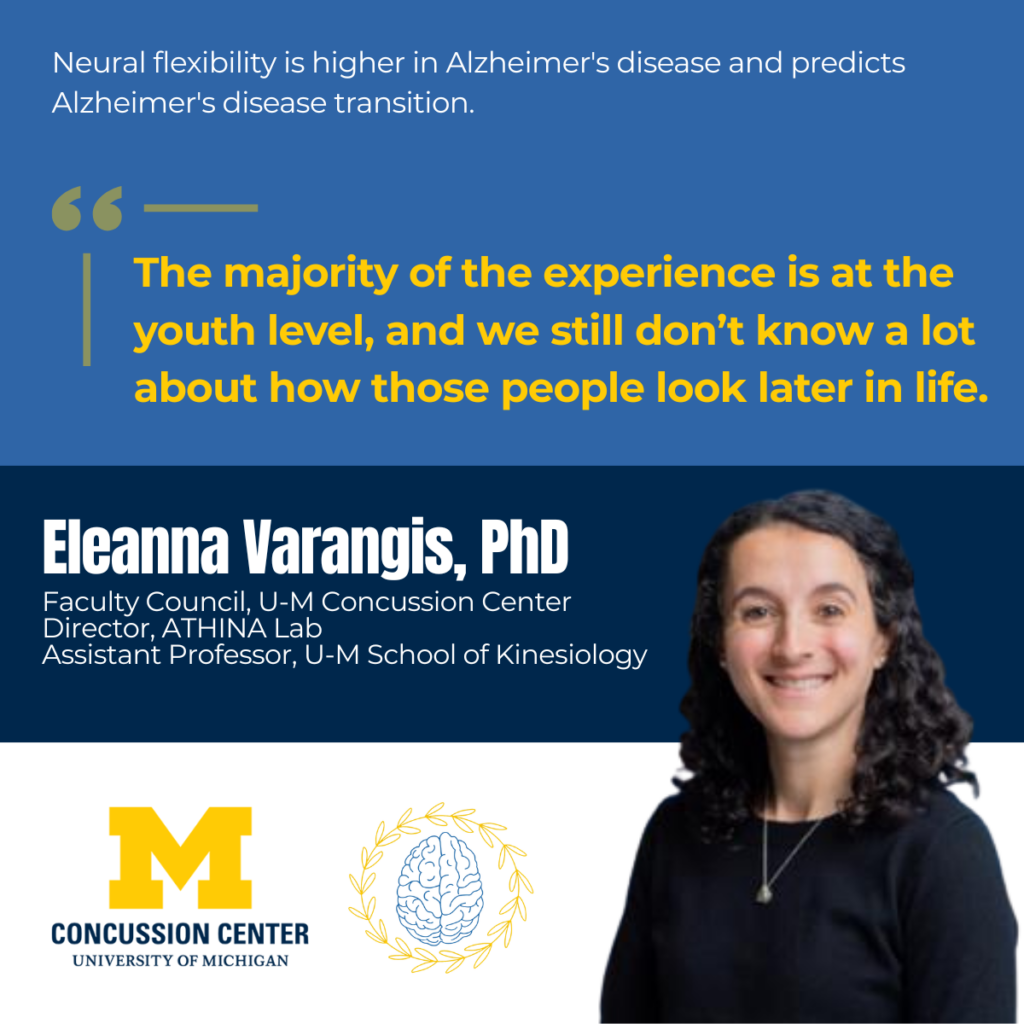
The brain’s activity at rest may provide clues to Alzheimer’s disease progression, diagnosis
A new study led by Dr. Eleanna Varangis, Concussion Center’s Faculty Council member and assistant professor at the U-M School of Kinesiology, offers a clearer picture of what may be happening in the brain long before Alzheimer’s symptoms appear. Researchers found that some parts of the brain in people with Alzheimer’s shift and reorganize more often, even when a person is simply resting, compared to those without the disease. By spotting these subtle changes sooner, scientists hope it may one day help doctors detect Alzheimer’s earlier and better understand how the disease develops over time.
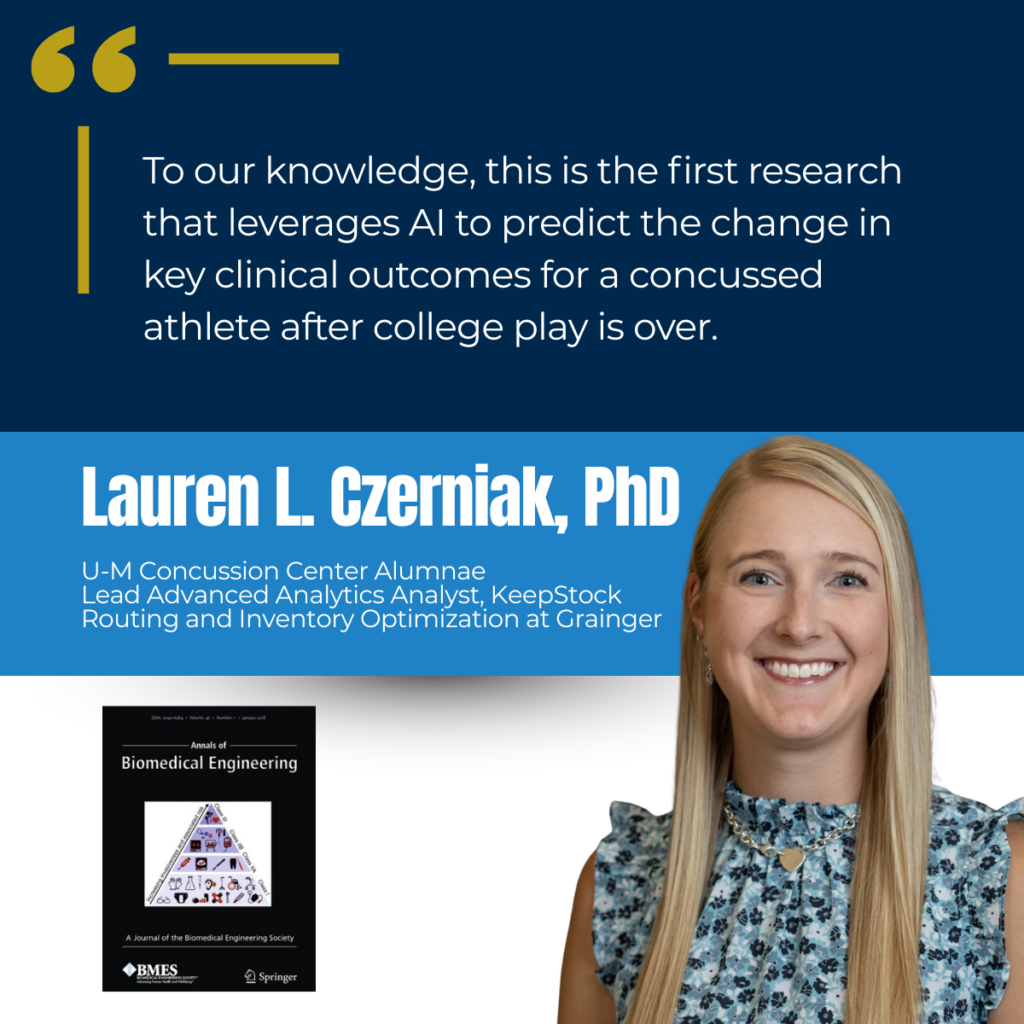
Researchers use AI to predict the toll of concussions on student athletes over time
U-M researchers are using AI to predict the long-term health impacts of sport-related concussions on student-athletes. Published in Annals of Biomedical Engineering, the study led by center alumnae member Dr. Lauren L. Czerniak could help clinicians protect athletes’ long-term health and safety. By analyzing data from more than 3,000 NCAA athletes, the team found that AI could more accurately predict changes in symptoms, thinking, and mental health over time—and even uncovered surprising patterns, such as the limited role that concussion frequency or sport type played in long-term outcomes. The work highlights how AI may one day help clinicians identify which athletes need closer follow-up and support./
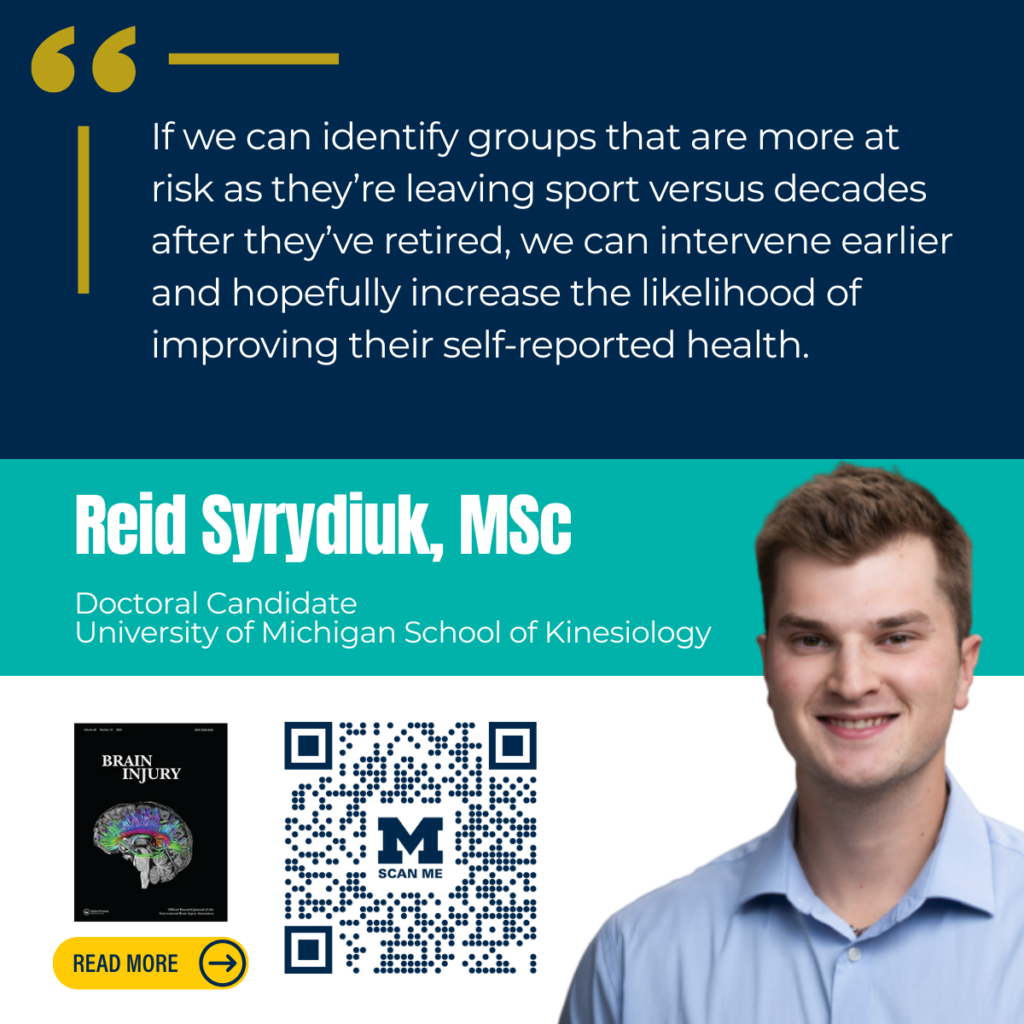
Concussion history in NCAA athletes yields mixed health outcomes
New research from the CARE Consortium, led by U-M School of Kinesiology doctoral candidate Reid Syrydiuk, published in Brain Injury, found that although athletes with multiple concussions reported worse mental and symptom health, those participating in contact sports and with more years of participation actually reported better mental health scores. The findings challenge assumptions linking concussion and head impacts to mental health and highlight how team environments may be protective during the transition out of college athletics.
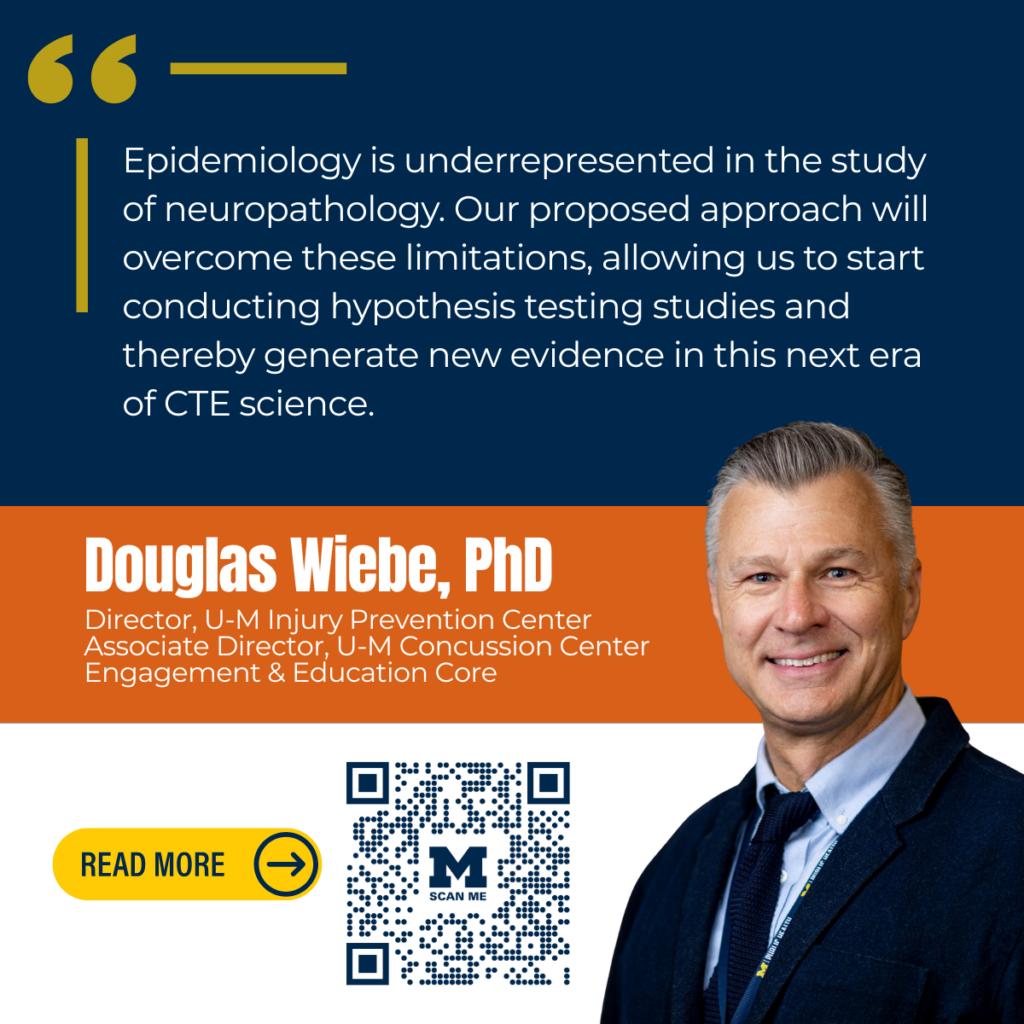
First population-based case-control study of traumatic brain injury (TBI) and chronic traumatic encephalopathy (CTE)
New in the British Journal of Sports Medicine (BJSM): Dr. Douglas Wiebe shares a new vision for how we study chronic traumatic encephalopathy (CTE). Instead of relying only on case reports, his proposed population-based case-control study would be the first to estimate how common CTE really is and whether traumatic brain injury (TBI) increases the risk. This design—partnering with trauma centers, brain banks, and using national data standards—could bring the field into a new era of stronger, evidence-based science that better informs athletes, families, and clinicians.